
Metrics and
Targets
Our metrics and targets were selected with the IFRS S1 disclosure standards as a reference, resulting in the following objectives:
► To measure our compliance with regulatory requirements;
► To check our progress on our mission;
► To assist our stakeholders understand our performance relative to our material risks and opportunities;
► To guide our decisions on strategy implementation; and
► To guide performance against the metrics to help decide on appropriate actions to keep the business on track.
The following are the attributes of our selected metrics:
► Crosscutting (applies to the varied nature of our subsidiaries)
► Quantitative metrics for those required by regulations and qualitative for others
► To ensure consistency in reporting, the procedures and methods to arrive at the metrics are encoded in an ESG Data Management Guideline which the group developed in 2024. The guidelines prescribe the definition of terms, sources of data, calculation methodologies, and other references to needed databases derived from international standards and protocols
Our quantitative/qualitative metrics and outcomes were subjected to a third-party limited ESG data assurance. The assurance report is available as Annex 2 on pages 253-255.

Below are the common metrics that our subsidiaries comply with:
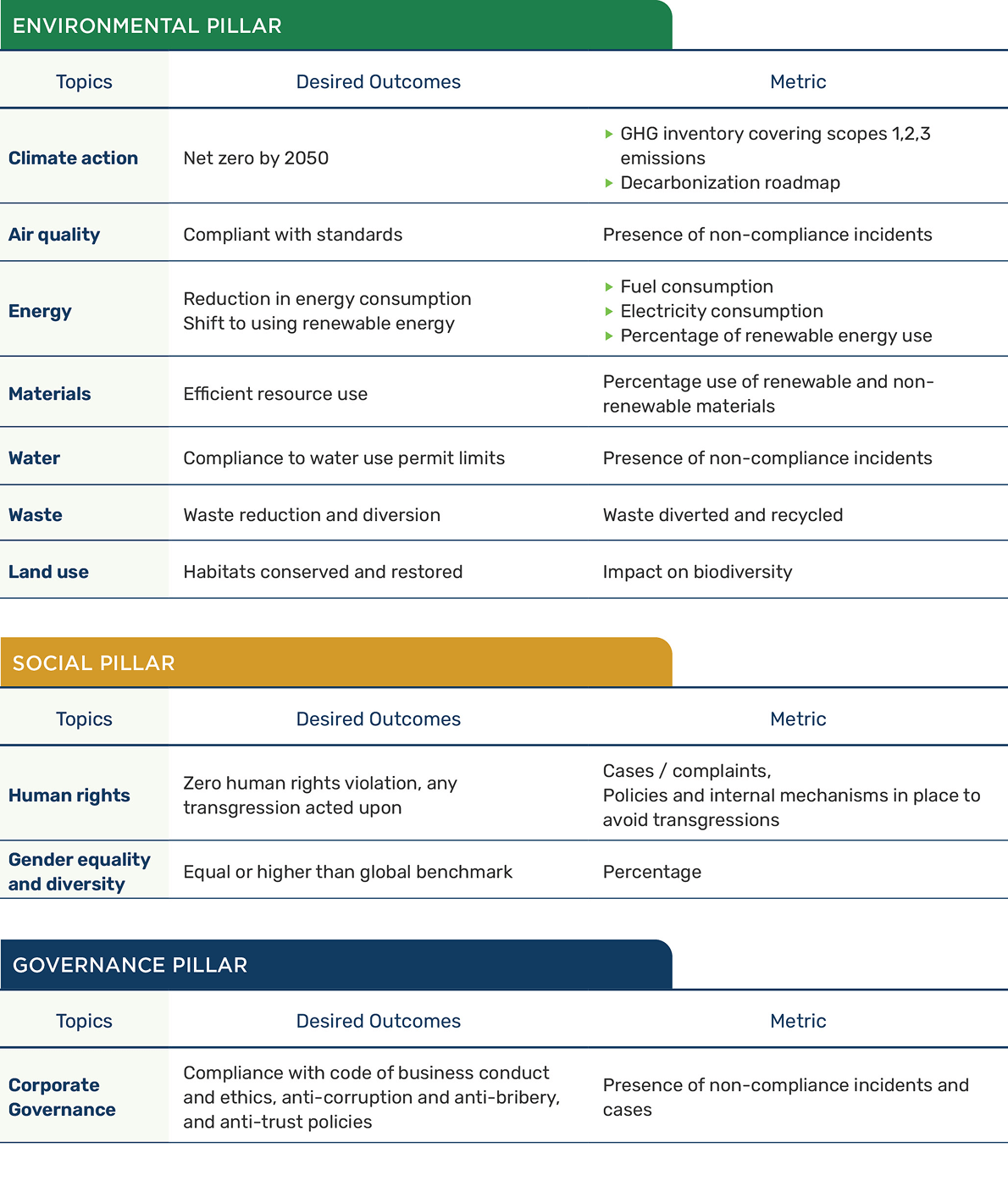
We shall use the GRI standards and UNGP-BHR for our impact materiality analysis and the IFRS S2 for financial materiality. FPH and its subsidiaries have been trained by experts on SASB standards for financial materiality. We shall study the appropriate industry specific standards in 2025 in preparation for the SEC adoption of IFRS which is proposed for compliance in 2027 based on the latest jurisdictional road map of PSRC in July 2024.18
Our targets, which are slowly being developed, are discussed under the section Progress on Our Mission on pages 214-221.