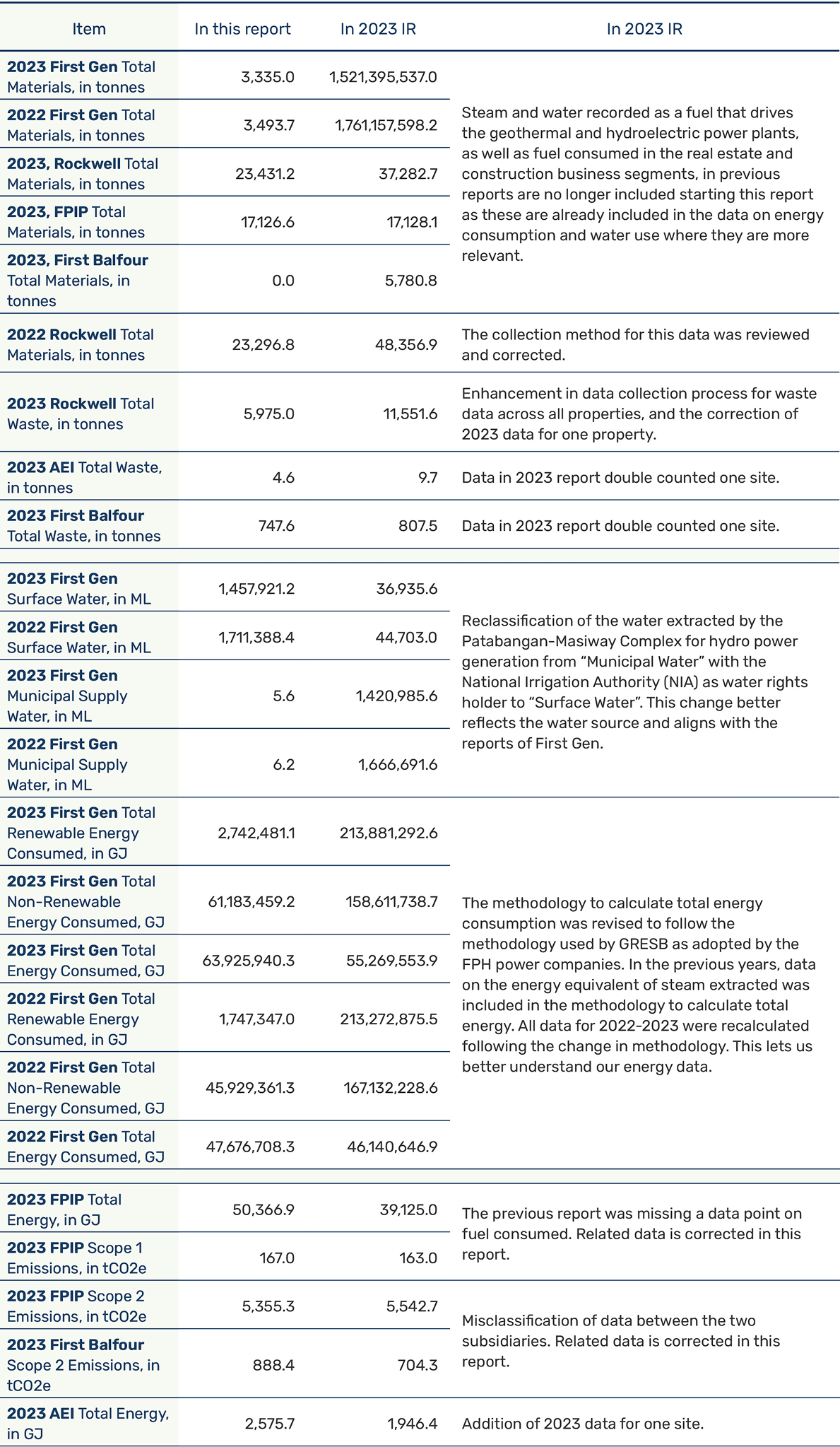
I. Restatements
II. Annotations
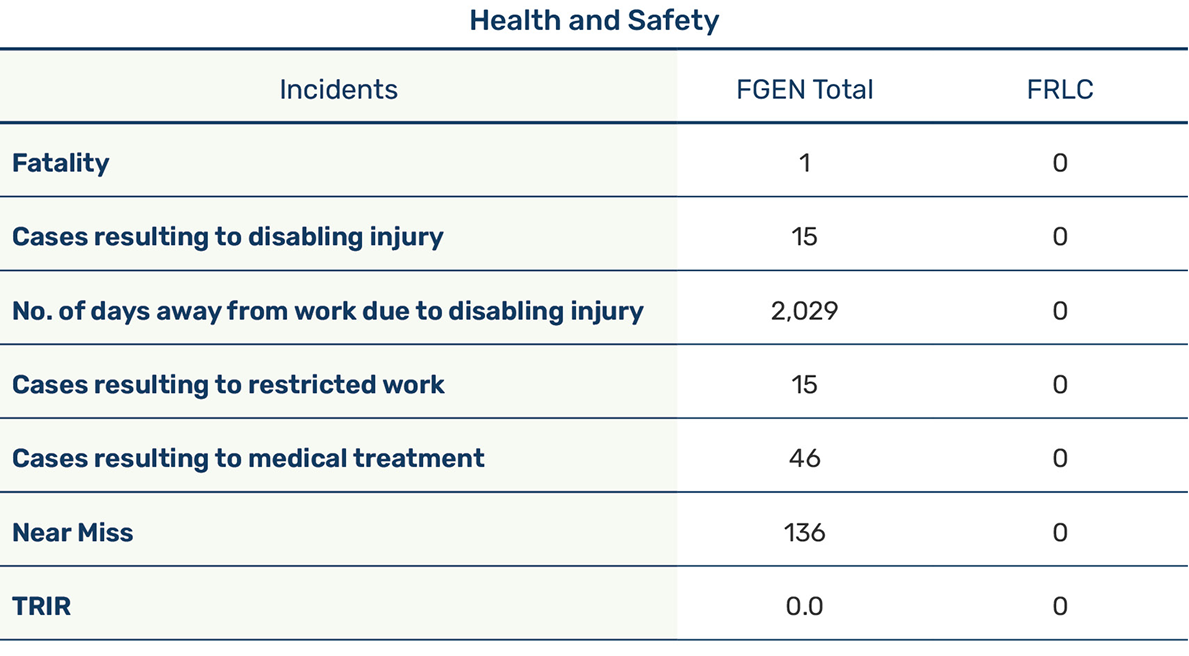
A. Fresh River Lakes Corporation (FRLC)
The following data of the entity FRLC were not included in the limited ESG assurance conducted by ERM-CVS, due to being a newly acquired asset of First Gen wherein its data collection processes are still being refined.
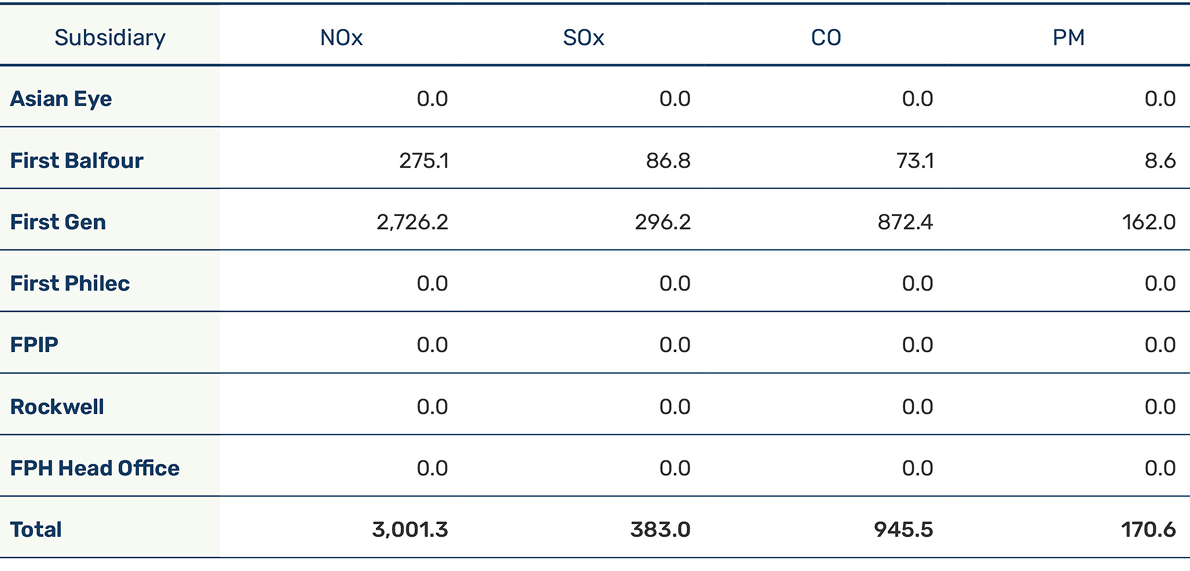
B. Details on Air Emissions
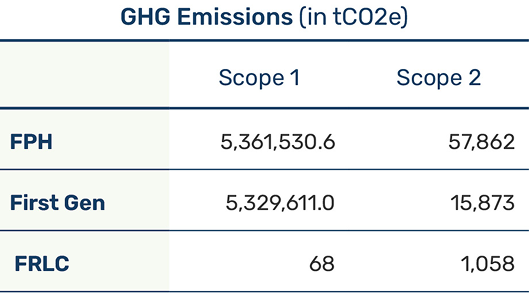
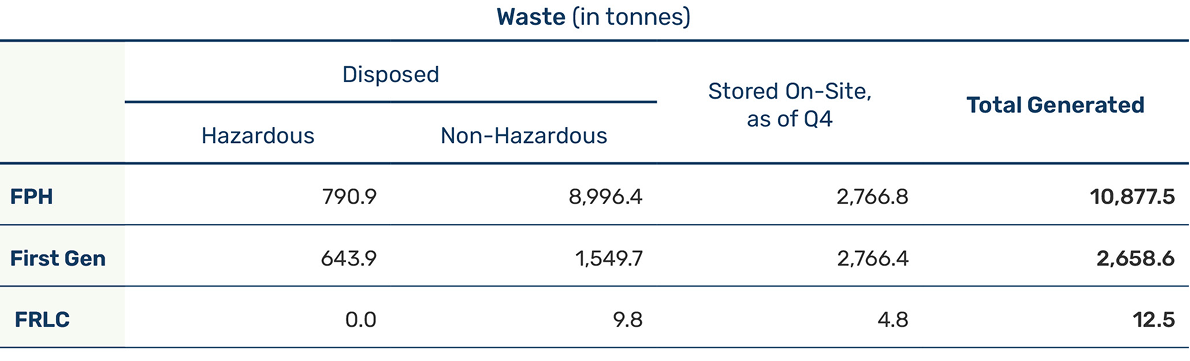
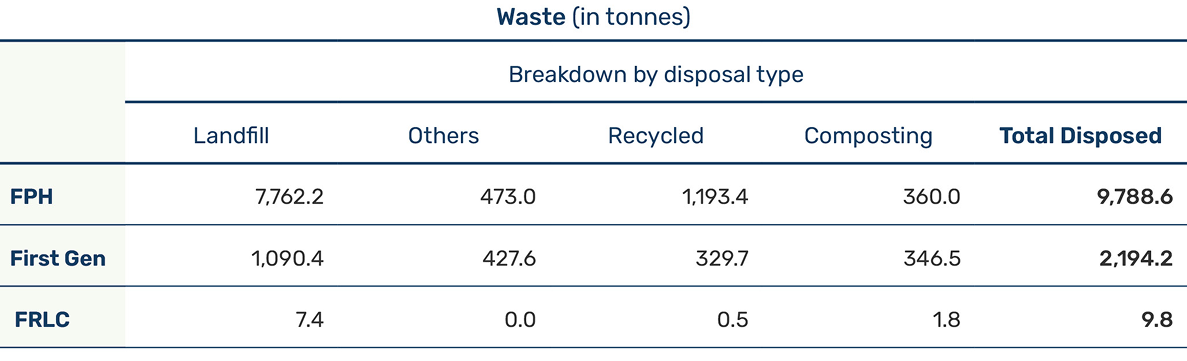
The following are the air emissions, by weight, from our subsidiaries:
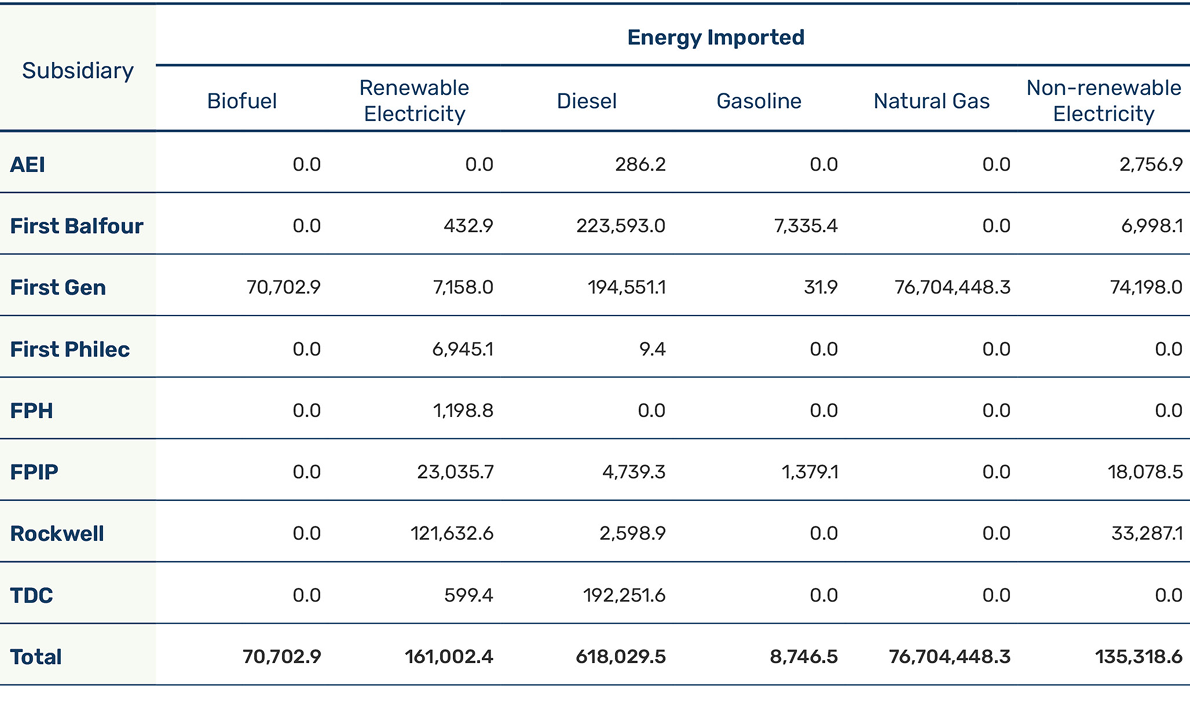
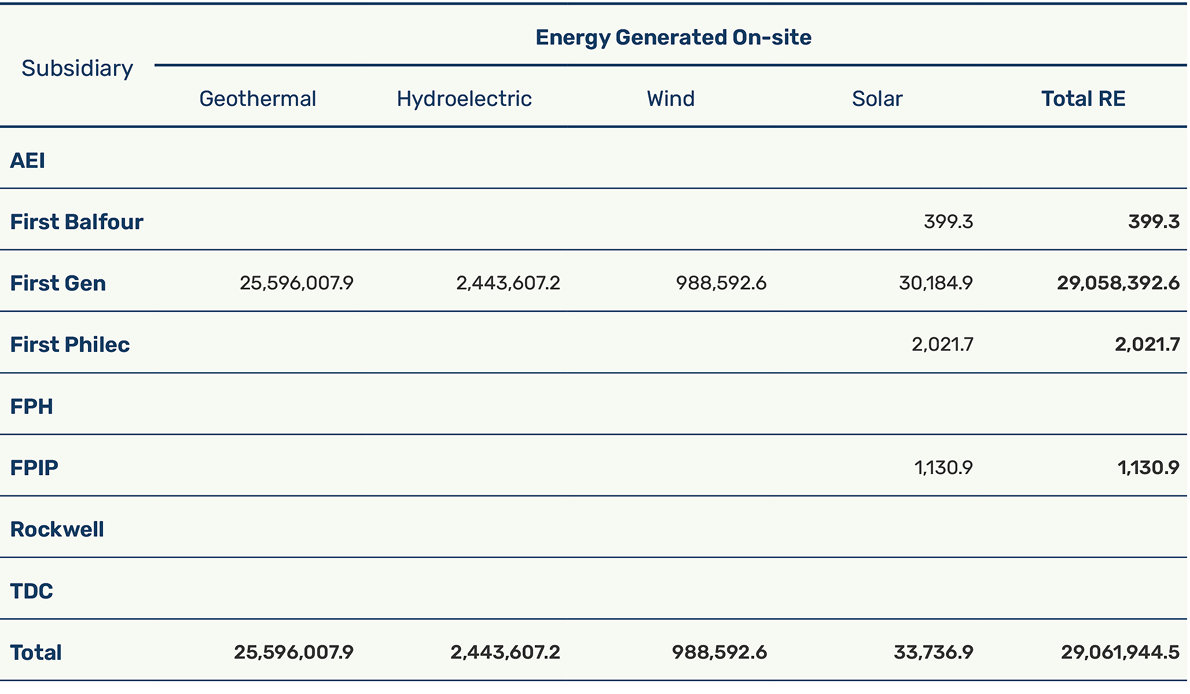
C. Details on Energy Consumption
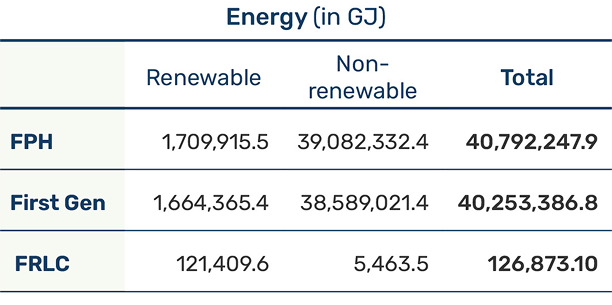
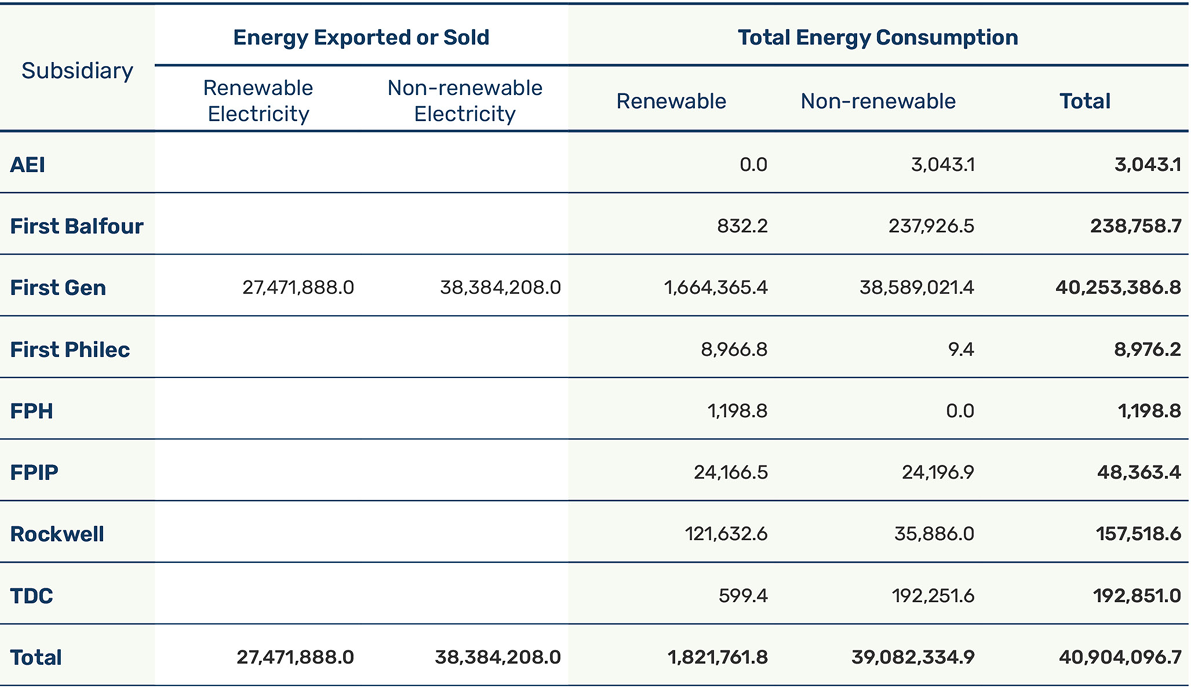
The following presents the breakdown on energy generation and consumption across the FPH businesses.
D. Methodology on GHG Emission Calculations
Greenhouse gas emissions across the FPH businesses are calculated through the use of an ESG data management platform. Emission factors for fuel use makes use of the emission factor database from the GHG Protocol.
Emission factors for Scope 2 emissions are based on:
► Inthe latest available National Grid Emission Factors published by the Department of Energy for electricity consumption for the grid; and
► Infthe emission factors provided by retail electricity suppliers where renewable electricity is purchased
Scope 3 emissions were calculated with the help of a third-party expert. With regards to emission factors, the following tools and databases were used:
► UK DEFRA Emission Factors
► US EPA Supply Chain Greenhouse Emission Emission Factors Dataset
Base year emission recalculations are triggered by a 5% threshold on significant changes in the GHG inventory of FPH.
E. Water Impacts and Management
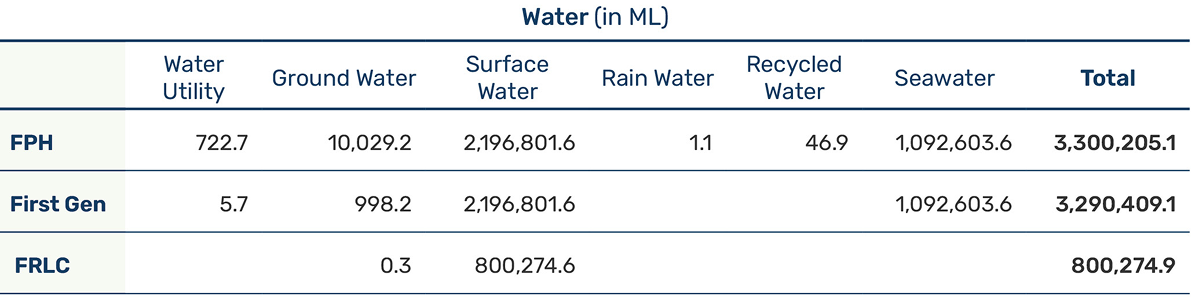
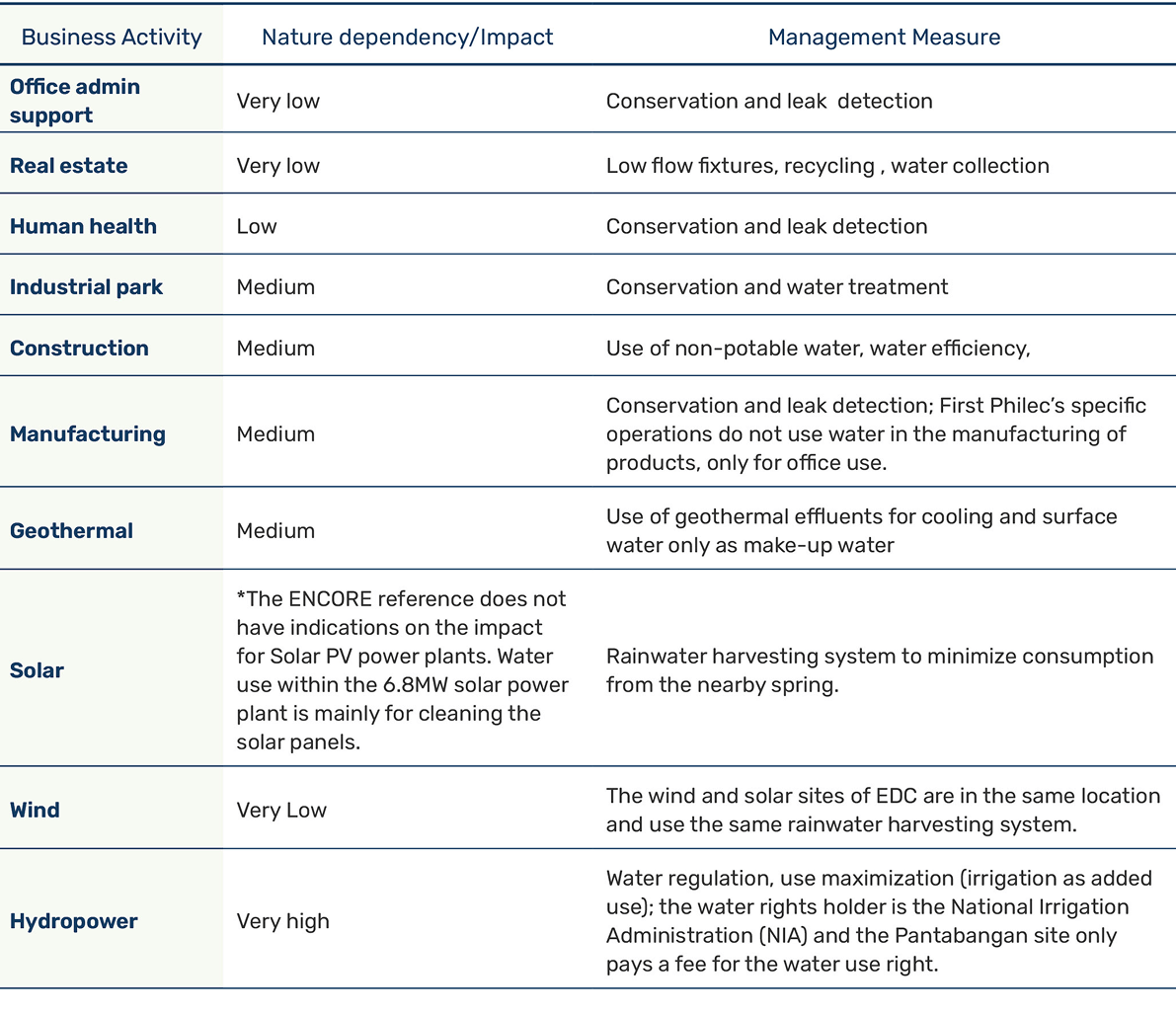
The impact of the FPH business on water was assessed using the ENCORE (Exploring Natural Capital Opportunities, Risks and Exposure) prescribed by TFND which can be accessed at https://encorenature.org/en/ explore. In summary, the tool provides the following results on the water dependencies of our FPH business segments and the management measure:
F. Health and Safety Protocols
The following are the safeguards of workers from work-related hazards:
► Hazard Identification and Risk Assessment
FPH employs a systematic approach to identify and manage work-related hazards and risks. Routine identification involves scheduled inspections, job safety analysis (JSAs), and regular hazard reporting mechanisms. Non-routine hazard identification addresses new tasks, incidents, and changes in operations through risk assessments and change management processes.
Risk assessment, for both routine and non-routine hazards, evaluates the likelihood and severity of potential harm. Subsequently, the group applies the hierarchy of controls (elimination, substitution, engineering controls, administrative controls, and personal protective equipment) to eliminate hazards where feasible and minimize remaining risks to acceptable levels. This process is continuously reviewed and updated.
FPH ensures quality hazard identification and risk assessment through defined procedures, competent personnel (achieved via training and assessment), multi-disciplinary teams, regular reviews (inspections, audits, incident analysis), and documentation.
►
Enhancement of Processes for Continual Improvement.
FPH uses the results of hazard identification and risk assessment to evaluate OH&S performance by:
- ► Identifying areas needing improvement: High-risk areas and recurring hazards highlight weaknesses in the system.
- ► Informing control measure effectiveness: The success or failure of implemented controls is assessed.
- ► Tracking progress: Changes in risk levels over time indicate the impact of interventions.
- ► Identifying training needs: Recurring human factors in incidents point to competency gaps.
- This evaluation then drives continual improvement by:
- ► Prioritizing actions: Focusing resources on the most significant risks.
- ► Revising procedures: Updating processes based on findings and lessons learned.
- ► Adjusting controls: Implementing more effective measures where needed.
- ► Setting new objectives: Establishing targets for risk reduction and safety enhancement.
- ► Informing management review: Providing data for strategic decision-making regarding the OH&S management system.
► Reporting work-related hazards
FPH provides accessible channels for workers to report work-related hazards and hazardous situations through verbal reporting to supervisors, written hazard report forms/systems, and potentially anonymous reporting options.
Workers are protected against reprisals through a clearly communicated non-retaliation policy, management commitment to investigate all reports fairly and confidentially, and mechanisms for workers to raise concerns about potential retaliation without fear of negative consequences. The focus is on encouraging open reporting to proactively address safety issues.
► Protecting the rights of workers to avoid work-related hazardous situations
FPH empowers workers to remove themselves from imminently dangerous situations through a “Stop Work Authority” (SWA) policy. This policy grants workers the right and responsibility to cease work when they have a reasonable belief that it poses an immediate risk of serious injury or ill health”
Workers are protected against reprisals for exercising their SWA through a clearly communicated non-retaliation policy, management commitment to support and respect SWA decisions made in good faith, and processes for reviewing and learning from SWA events without assigning blame. The emphasis is on fostering a safety culture where workers feel empowered to prioritize their well-being without fear of negative consequences.
► Investigation of work-related hazards and corrective actions
FPH investigates work-related incidents using a structured process that includes:
- ► Incident Reporting & Initial Response: Prompt reporting and securing the incident scene.
- ► Fact-Finding & Data Collection: Gathering evidence through interviews, site examination, and document review.
- ► Hazard Identification & Risk Assessment: Analyzing the incident to pinpoint specific hazards and assess the associated risks that contributed to the event.
- ► Root Cause Analysis: Identifying the underlying causes beyond immediate triggers.
- ► Corrective Action Determination: Developing solutions using the hierarchy of controls (elimination, substitution, engineering, administrative, PPE) to prevent recurrence.
- ► System Improvement Identification: Determining broader OH&S management system deficiencies revealed by the incident, such as inadequate procedures, training gaps, or control measure failures.
- ► Implementation & Follow-up: Implementing corrective actions and verifying their effectiveness.
- ► Communication & Learning: Sharing lessons learned to prevent similar incidents across the organization.