FPH businesses are nested in the environment and communities where they operate. This interconnection of the natural, social, and economic systems steers us to act as one with the government to protect the total system. Thus, our businesses are designed to contribute to the sustainable development of our country.
In executing our mission, we are guided by the Philippine Development Plan (PDP), which addresses our national circumstances, and the UNCTAD-ISAR covering the developmental concerns of business. The outcomes generated by the utilization of our six capitals are aligned with PDP’s strategies of expanding and upgrading the infrastructure (energy in particular), accelerating climate action, and strengthening disaster resilience, among others30. They also support two out of the six UN transformation entry points that UNCTAD is working on to promote business and trade, namely, energy transition and climate change, biodiversity loss and pollution31.
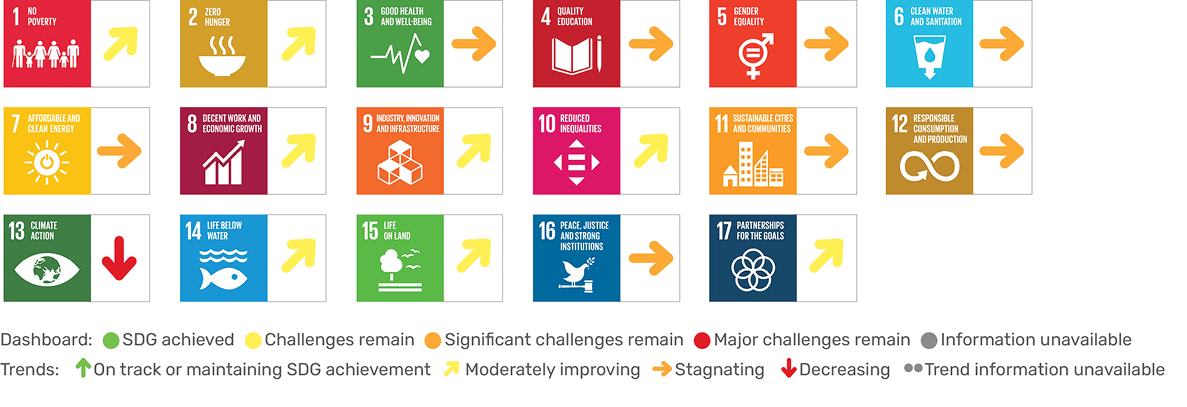
With only five years to go for the world to meet the SDGs, our government needs the support especially from the business sector as underscored by UNDP32. The agency cited the new urgency for the mobilization of the private sector for the country to achieve sustainable and inclusive growth. At the same time, almost all the SDGs have not been achieved by the country.33
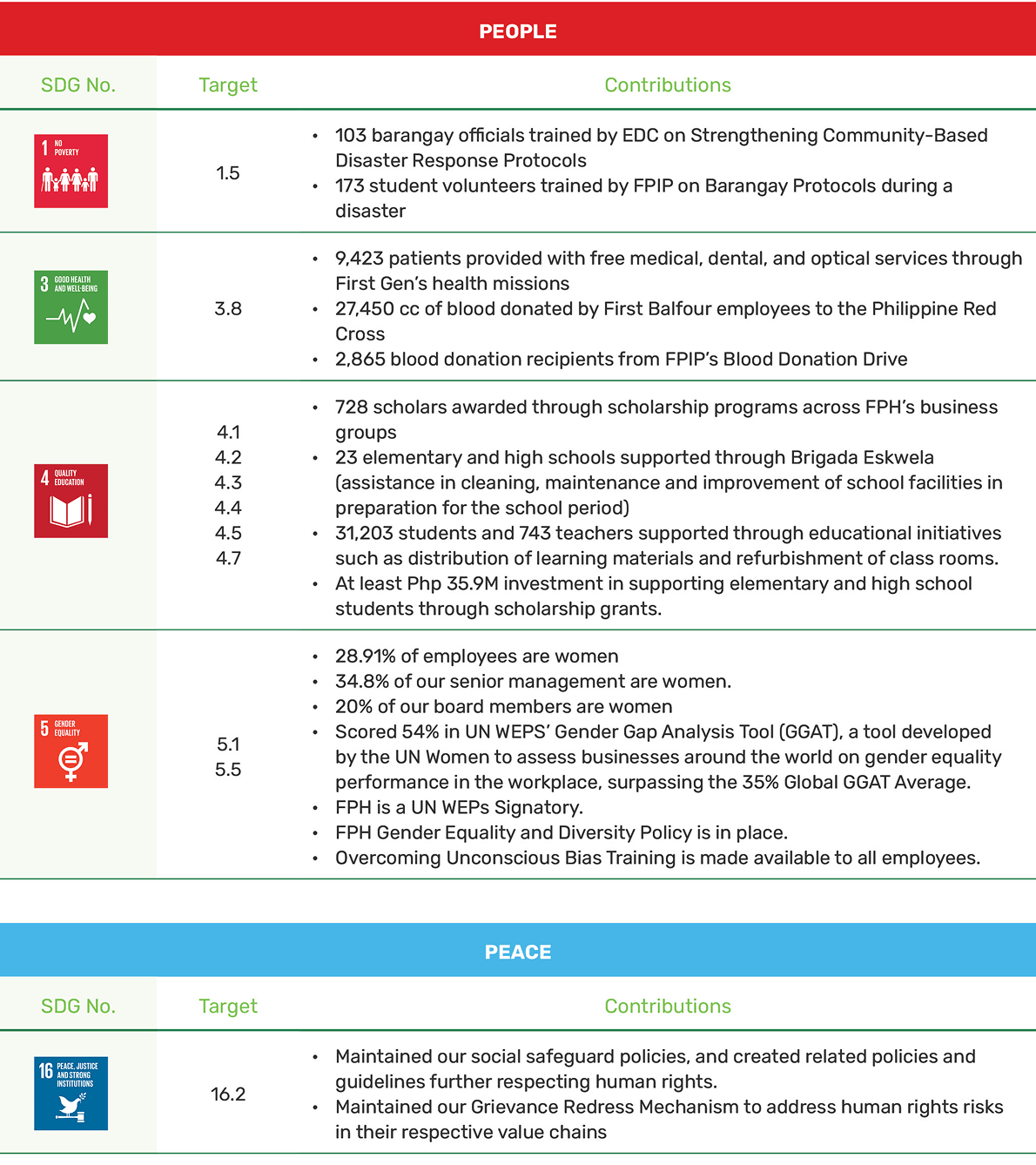
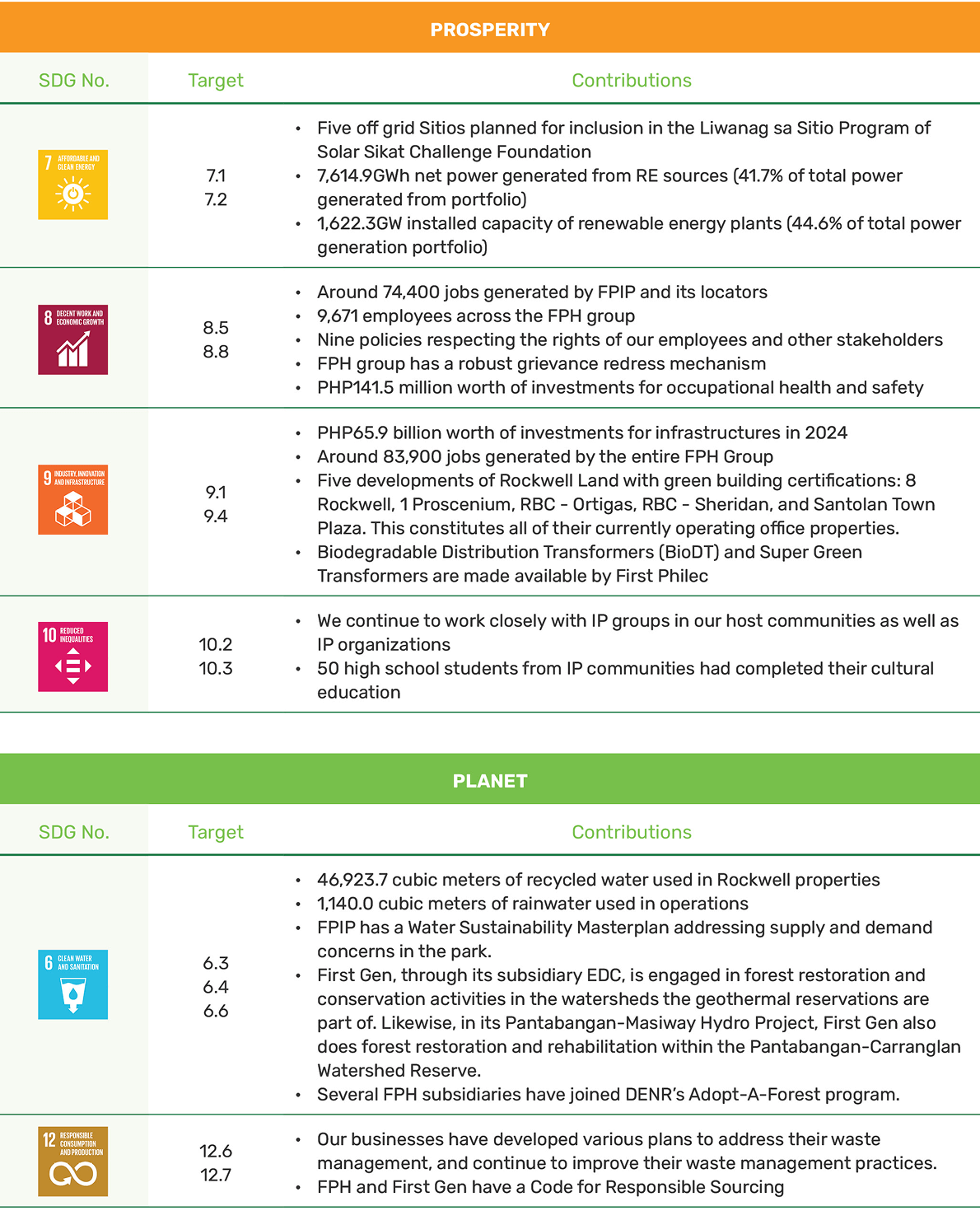
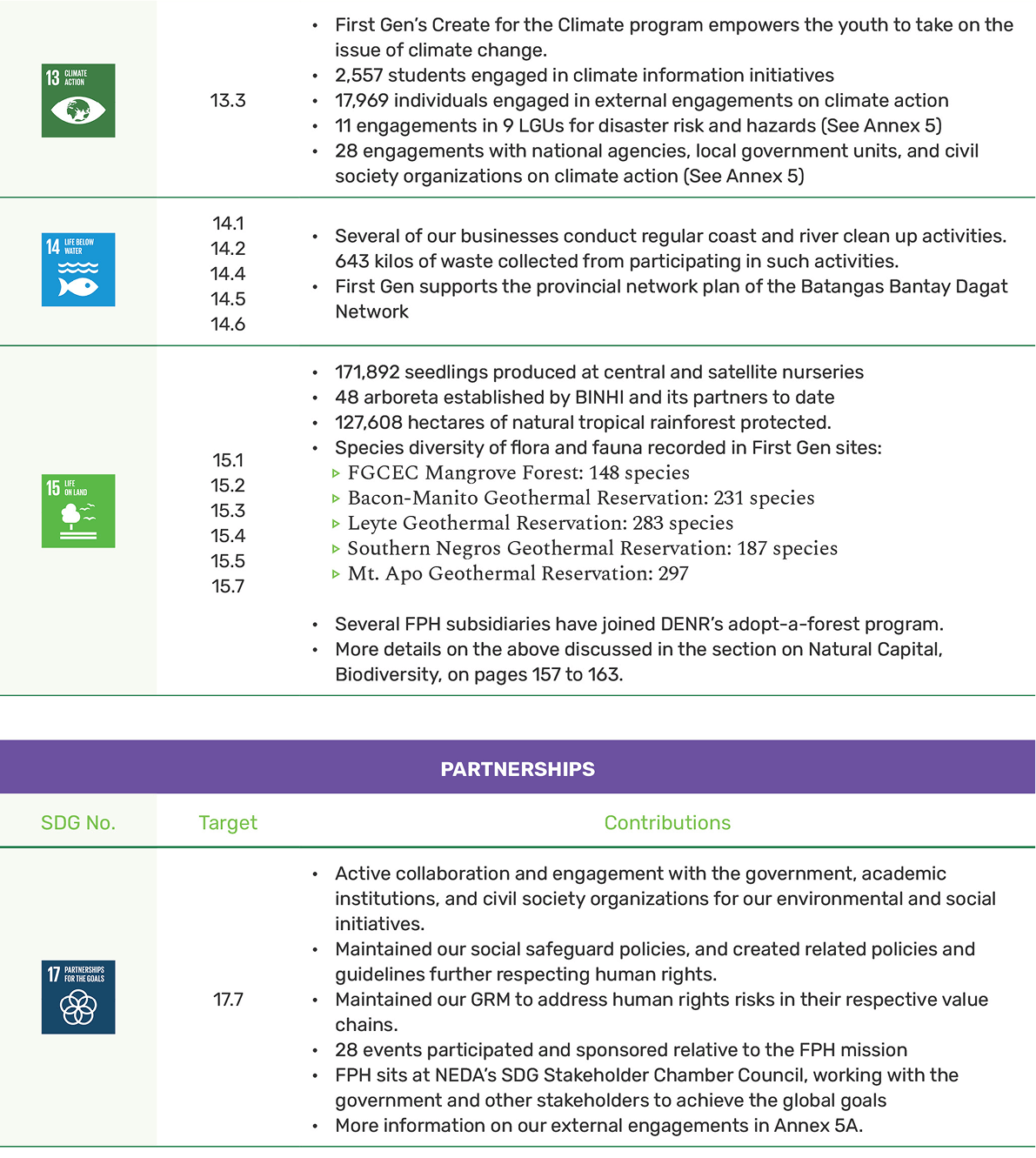
In 2024, FPH continued to do its share contributing to almost all SDGs due to the slow progress reported. In identifying our SDG contributions, we assessed our outcomes and aligned them with SDG targets and indicators. Results show that our businesses have positively impacted the environment and society through their business activities and corporate initiatives. Consolidating these, we contributed to 15 out of the 17 goals and impacted 47 targets and indicators.
We continue to be an active member of the Environment Committee of the SDG Stakeholder Chamber of the country’s National Economic and Development Authority in the pursuit of sustainable development. We present below the details of our SDG contributions.
Philippine SDG Dashboard and Trends
30 National Economic and Development Authority (2023). Philippine Development Plan 2023-2028. Retrieved from https://pdp.neda.gov.ph/philippinedevelopment-plan-2023-2028/
31 UN Department of Economic and Social Affairs (2024). UNCTAD/UN Trade and Development. Retrieved from https://sdgs.un.org/un-system-sdgimplementation/unctadun-trade-and-development-57135
32 Center for Impact Investment and Practices, UNDP (2024). SDG Investor Map Philippines. Retrieved from https://www.undp.org./philippines/publications/ philippine-sdg-investor-map
33 Sachs, J.D., Lafortune, G., Fuller, G. (2024). The SDGs and the UN Summit of the Future. Sustainable Development Report 2024. Paris: SDSN, Dublin: Dublin University Press.10.25546/108572.