
The business environment we faced in 2024 mirrored many global challenges. The mix of natural and manmade challenges is an influential factor in how we deliver the FPH mission, especially as we adapt our process to the different opportunities this landscape presents.
Our Process:
External developments were captured from daily news reports, literature search, participation in fora, engagement of experts, and networking with the government, industry, academe, and civil society organizations. As we impart information to our networks, we also gain insights from them. Annex 5 is a list of our 28 short-term and 6 long-term engagements in 2024.
Macroeconomic indicators, business trends, and international and local issues were tracked by our Corporate Planning Group. These are then regularly evaluated in terms of benchmarking with the industry, analysis of the impact of market trends to the business, and the monitoring of various market movements that may signify shifts that FPH must consider.
The local and global developments in ESG were tracked by our Corporate Sustainability Group. The other organic groups of FPH contributed to the inventory of the external factors based on their areas of responsibility. The influence of these non-financial factors informed the strategic business plan of each subsidiary.
In terms of timing, the external factors were discussed during the strategic presentation of the various subsidiaries to Senior Management at least twice a year. As needed, critical plans are elevated to the Board for guidance during its monthly meetings, but the Board conducts its own strategy meeting for the year.
Influence of External Factors on our Business:
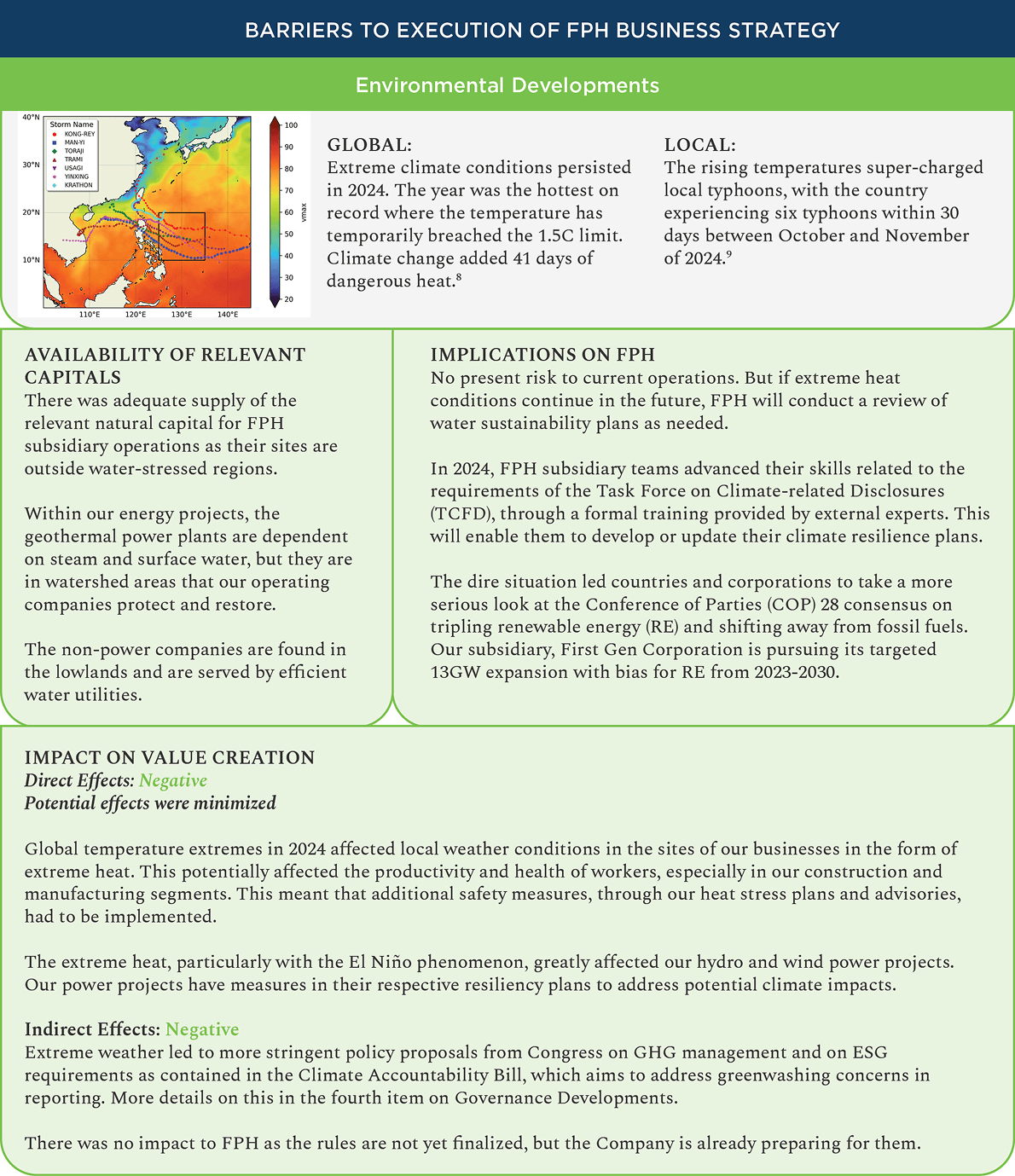
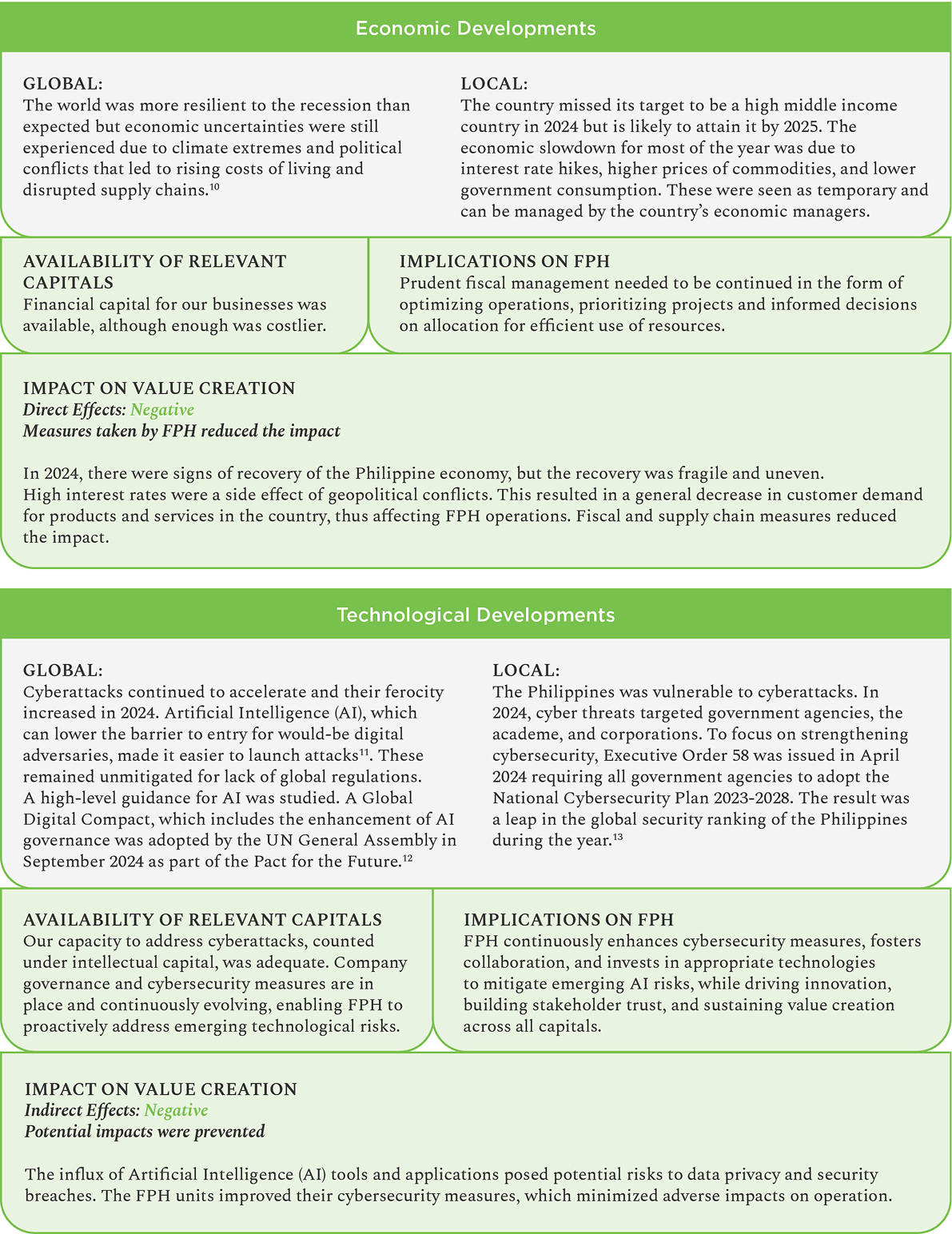
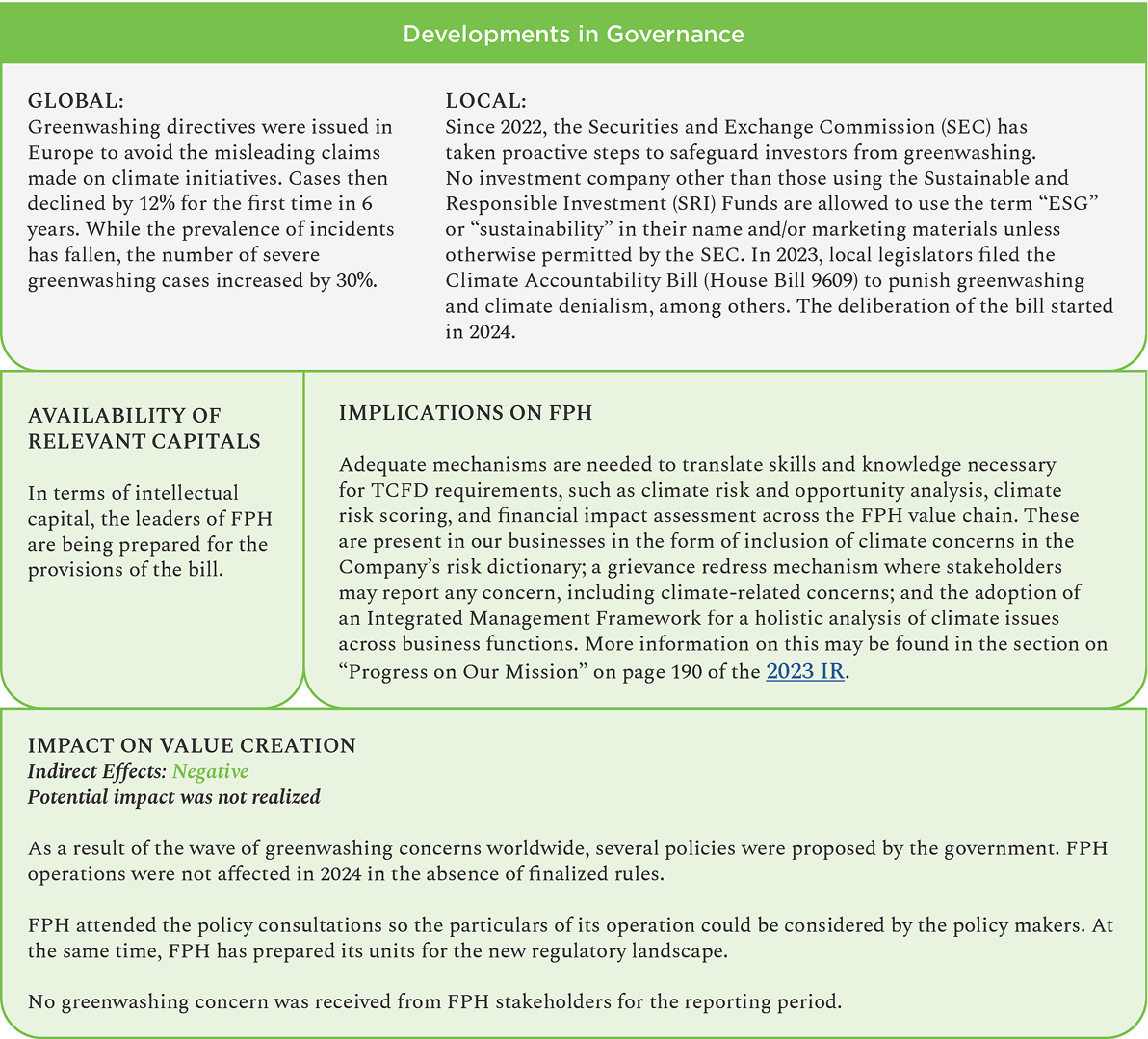
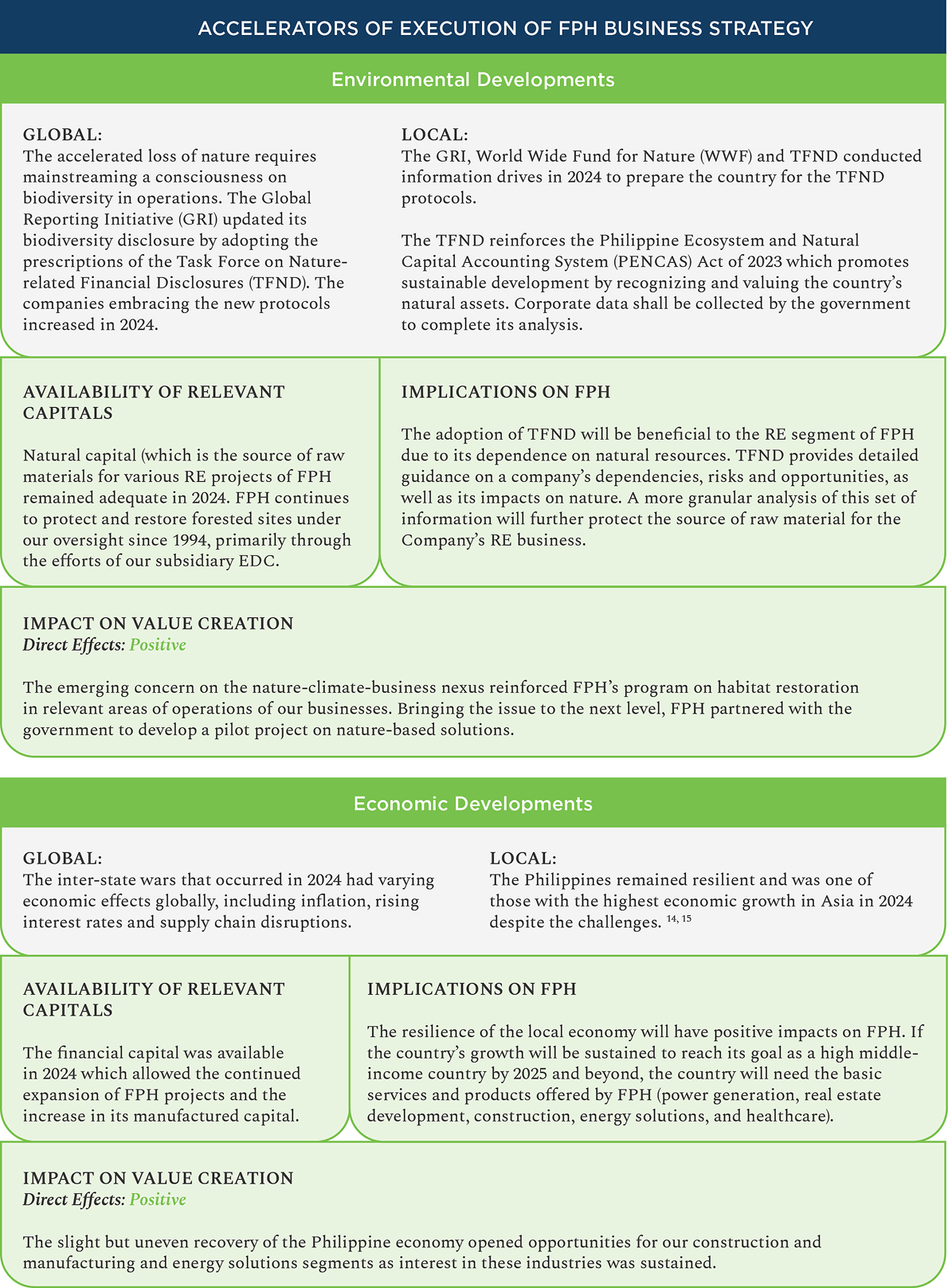
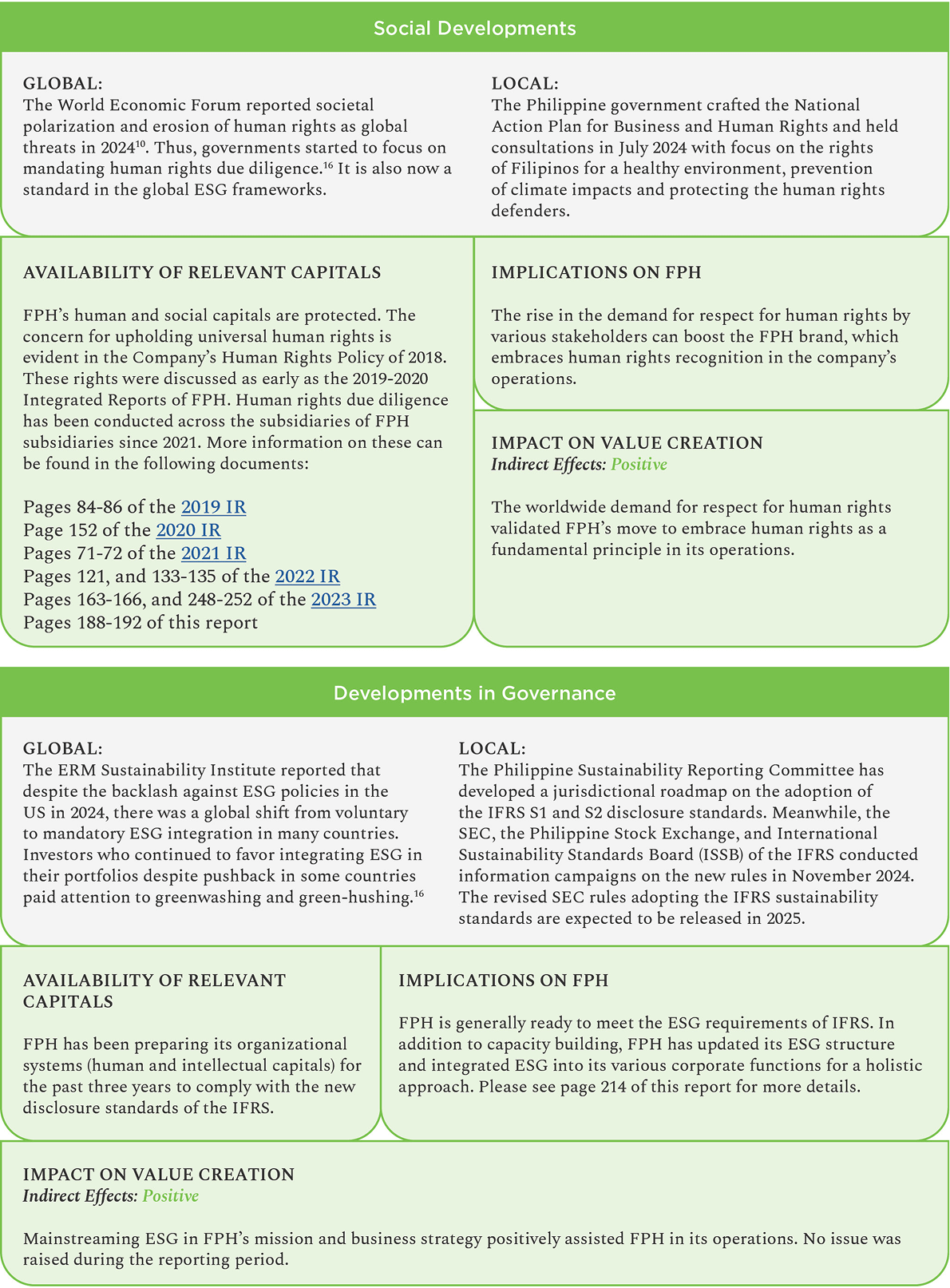
External factors affected the availability, affordability, and quality of the capitals that were used for business activities in 2024. These resulted in either the acceleration or impediment of the execution of our business strategy and value creation. In 2024, the major contexts that affected our business are summarized below.
8 WMO (2024). State of the Climate. Retrieved from https://library.wmo.int/records/item/69075-state-of-the-climate-2024.
9 World Weather Attribution (2024). Climate change supercharged late typhoon season in the Philippines, highlighting the need for resilience to consecutive events. Retrieved from https://www.worldweatherattribution.org/climate-change-supercharged-late-typhoon-season-in-the-philippines-highlighting-theneed-for-resilience-to-consecutive-events/
10 World Economic Forum (2024). Global Risk Report 2024. Retrieved from https://www3.weforum.org/docs/WEF_The_Global_Risks_Report_2024.pdf
11 Crowdstrike (2024). 2024 Global Threat Report. Retrieved from https://go.crowdstrike.com/global-threat-report-2024-thank-you.html
12 UN (2024). The Pact for the Future. Retrieved from https://www.un.org/pga/wp-content/uploads/sites/109/2024/09/The-Pact-for-the-Future-final.pdf
13 Philippine News Agency (2024). PH makes a big leap in global security rankings. Retrieved from https://www.pna.gov.ph/articles/1233410
14 Gonzales, A. (2024). PH posts one of highest economic growth in Asia. Retrieved from https://www.pna.gov.ph/articles/1240519
15 Oplas Jr., B. (2024). The economic impact of 2 years of war in Ukraine , and the Philippine fiscal situation. Retrieved from https://www.bworldonline.com/opinion/2024/02/27/577880/the-economic-impact-of-2-years-of-war-in-ukraine-and-the-philippines-fiscal-situation
16 ERM (2024). Annual Trends Report: The Next Steps for Sustainable Business. Retrieved from https://www.erm.com/contentassets/a2434731461f49c7a38b039c7d5cd0e4/erm-si-2024-annual%20trends-report-webinar-deck.pdf